An HR manager opens the storeroom three months after the annual day and finds a stack of unclaimed shirts. They are stiff, boxy, printed with a logo the size of a dinner plate, and nobody wanted to wear them. The budget was spent and the goodwill was not earned. Corporate T-shirts can build team pride or end up as dusters, and the difference comes down to a handful of decisions made before the order is placed.
This article covers where branded shirts fit in company life, how to pick fabric and fit, which print methods suit which designs, how to handle sizing for large teams, what a sensible budget and timeline look like and how to avoid the common mistakes. If you are shortlisting a T-shirt manufacturer in Chennai for your next event, use it as a checklist.
Where Branded T-Shirts Earn Their Place
A shirt works harder than most corporate merchandise because it gets worn in public, in photos and at home. Companies use them in several ways.
- Annual days, offsites and team-building events, where matching shirts create a sense of belonging
- Welcome kits for new joiners, which make the first week feel personal
- Festival and milestone gifts, such as work anniversaries or project launches
- Trade shows, promotions and field campaigns, where staff need to be easy to spot
- CSR drives and volunteering days, which look more organised when everyone is in the same colour
The purpose should decide the design. A shirt for a one-day sports event can be bold and loud. A shirt meant as a year-round gift needs to be plain enough that people choose it over their regular clothes.
Choosing Fabric That People Want to Wear
Fabric decides whether the shirt gets worn again. In Chennai’s heat, a heavy or synthetic-feeling tee gets left in the cupboard.
Cotton is the safest choice for gifts and office wear, since it is soft and breathable. Combed cotton costs a little more but feels smoother and keeps its shape through repeated washing. Polyester and dri-fit fabrics suit sports days, runs and outdoor activities, because they dry quickly and handle sweat well. Cotton-polyester blends sit in the middle, resisting creases and shrinkage while staying reasonably comfortable, which makes them practical for large batches.
Weight matters as well. A very thin shirt looks cheap and turns see-through in light colours, while an overly thick one feels warm. Ask for a sample in the actual fabric, hold it up to the light and wash it once before approving the full order.
Collar, Cut and Colour: Getting the Look Right
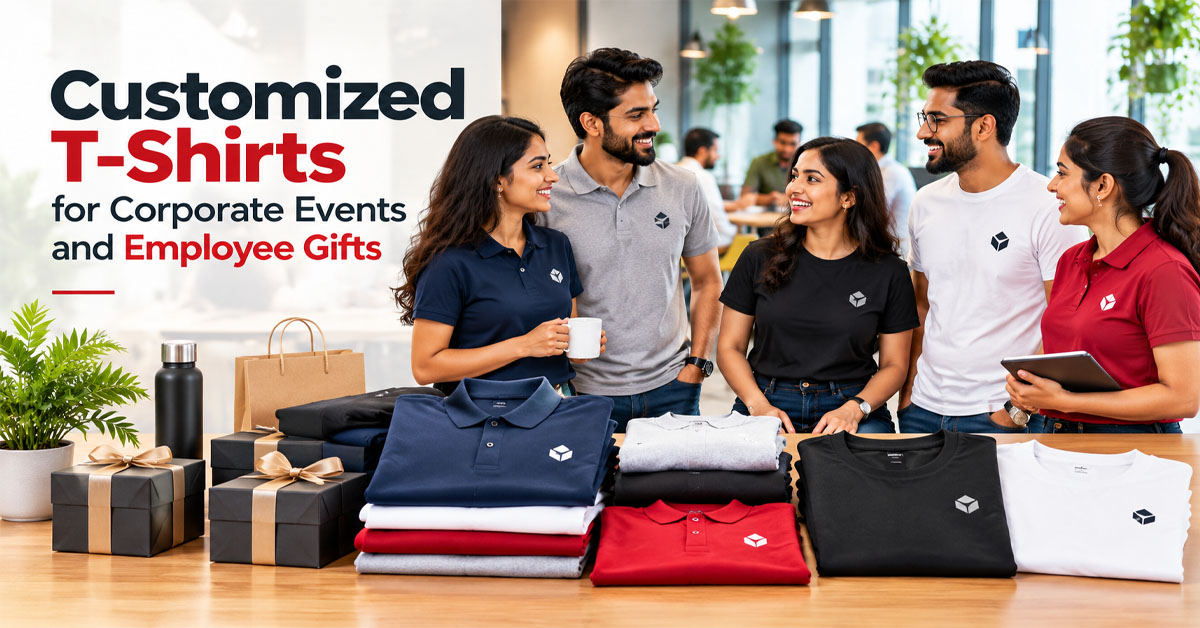
A round-neck tee is casual and works for events and volunteering. A polo gives a more professional look and suits client-facing staff, support teams and office wear. Hooded or sweatshirt styles can work for winter gifting in cooler cities.
Cut deserves attention too. Offering both unisex and women’s fits improves comfort and makes everyone feel considered. Colour should reflect the brand without making the shirt hard to wear. Navy, grey, black, white and muted tones are easy to pair with other clothes, while a bright brand colour can be used for the print, a collar trim or a sleeve band. If the logo is on a dark shirt, check that the print method keeps it sharp and bright.
Design Principles for Corporate Shirts
Good corporate design is restrained. A few rules keep it looking professional.
- Place a small or medium logo on the left chest, or a larger one centred on the front for event wear
- Keep text short, such as an event name, a year or a team slogan
- Use a maximum of two or three colours, which also keeps costs down
- Supply the logo as a vector file, so edges stay clean at any size
- Leave plenty of empty space around the artwork
- Use the back for a team name, a number or a sponsor line, if needed
Avoid cluttering the shirt with every sponsor and tagline. A clean design is more likely to be worn again and photographs better at events.
Print and Embroidery Methods Compared
The right method depends on quantity, design detail and how long the shirt needs to last.
Screen printing is affordable for larger runs with few colors and produces a strong and long lasting color. Digital printing is brilliant for short runs and designs that feature gradients, photos or plenty of colors, as there are no setup costs per color. Heat transfer works well for quick turnarounds and for names or numbers on individual shirts.Embroidery provides a premium finish to polos and caps and stands the test of time, but is more expensive per piece and better suited to small logos than large graphics.
Ask the printer which method they recommend for your quantity and artwork, and request a printed sample on the actual fabric. A short wash test shows whether the print will crack or fade.
Sizing, Personalisation and Distribution
Sizing is where large orders most often go wrong. A little preparation prevents reorders.
- Collect sizes using a simple form, with a size chart attached so people can compare with a shirt they already own
- If anybody isn’t sure, ask for chest measurements
- Add a small buffer of extra shirts in common sizes for late joiners and exchanges.
- names or employee id’s for events which helps with distribution consider printing
- Group shirts by team or location and label the bundles for quick distribution
- If the team is distributed across cities, plan to deliver to multiple offices
Personalised touches, such as a name on the sleeve or a short note in the pack, cost little and make a gift feel considered.
Budget, Timeline and Working With a Manufacturer
Cost per shirt falls as quantity rises, so ordering for several events or gifting occasions together can improve the rate. Ask for an itemised quote that shows the shirt, printing, setup, packing and delivery separately, so you can compare suppliers fairly.
For timing, plan backwards from the event date. Add time for the design to be approved, time to make a sample, time for production and delivery. And add time for changes. For larger orders, two to three weeks is a reasonable minimum, more for embroidery or multiple locations. Rush orders usually cost extra and leave less room to correct mistakes.
Chennai T-Shirts works with companies, event organisers, schools and student groups on custom-printed apparel, covering a range of fabrics and print methods. Its team guides buyers on fabric, design and quantity, and usually recommends checking a physical sample before the full batch is produced.
Mistakes to Avoid and a Final Thought
A few errors show up again and again. Ordering without a sample, choosing the cheapest fabric, using an oversized logo, ignoring women’s fits, skipping the size survey and leaving the order until the last week are the main ones. Each is easy to avoid with a little planning.
A good corporate shirt is one an employee reaches for on a weekend. Get the fabric, fit and design right, and the brand travels further than any banner could. For teams based in the north of the city who want to check samples in person and make quick adjustments, exploring T-shirt printing Anna nagar is a practical next step.