
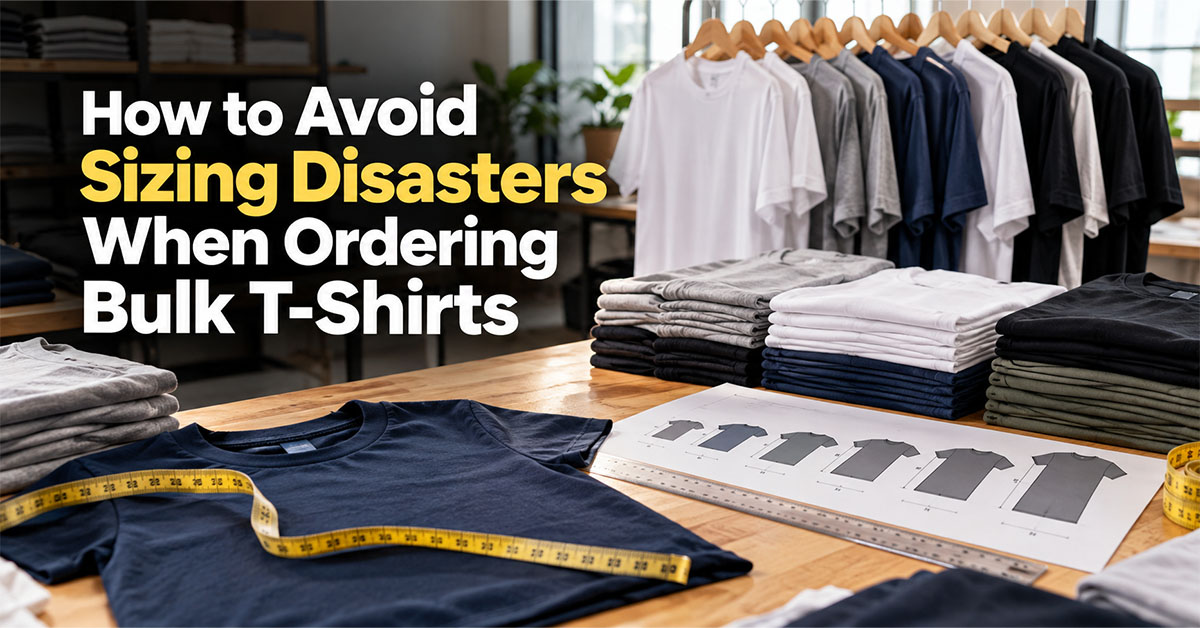
A college fest coordinator opens the delivery box three days before the event, hands out shirts to the volunteer team, and watches half of them struggle into sizes that run noticeably smaller than expected, while a few swim in shirts clearly cut for someone twice their frame. The order was correct on paper, right quantities, right size breakdown, but the actual garments didn’t match what anyone assumed those size labels meant. This is one of the most common, entirely avoidable problems in bulk ordering, and it usually traces back to a handful of decisions made, or skipped, before the order ever went to print.
Anyone working with a T-Shirt printing In Chennai provider for a large order should understand exactly where sizing disasters actually originate, and how to prevent them before an entire batch turns into a scramble for exchanges.
Why Size Labels Alone Can’t Be Trusted
A “Large” from one manufacturer doesn’t necessarily match a “Large” from another, and this inconsistency causes more bulk ordering problems than almost any other factor. Different fabric suppliers, different cutting patterns, and different manufacturing batches can all produce noticeable variation even within labels that appear standardised.
Relying purely on standard size labels, without verifying actual measurements, is where most sizing disasters begin. A group ordering based on assumed sizing, rather than confirmed measurements against a specific supplier’s actual size chart, is essentially gambling on consistency that isn’t guaranteed.
Requesting an Actual Size Chart Before Finalising Quantities
Every reliable printer should be able to provide a specific size chart showing actual body measurements, chest width, length, shoulder span, corresponding to each size label they use. This chart, not the generic size label alone, is what group organisers should actually be working from when collecting size information from a large group.
A few measurements worth confirming on any size chart:
- Chest width, measured flat across the garment, not just a general size label
- Total garment length, since this varies more between suppliers than most people expect
- Shoulder-to-shoulder width, particularly relevant for fitted or athletic-cut styles
Ordering a Sample Before Committing to Bulk Quantities
Requesting a physical sample in one or two sizes before finalising a large order remains one of the simplest ways to avoid a sizing disaster entirely. A sample allows organisers to physically try on the garment, compare it against the promised measurements, and catch discrepancies before hundreds of shirts arrive already printed and difficult to return.
Skipping this step to save a few days of turnaround time is consistently where the most expensive sizing mistakes originate, since correcting a bulk order after printing costs far more in both time and money than the sample would have cost upfront.
Collecting Size Information the Right Way From a Large Group
Sizing problems don’t always originate with the printer, sometimes they start with how size information gets collected from the group itself. A simple “what size do you wear” question, without reference to an actual chart, produces inconsistent, unreliable answers, since people’s assumptions about their own size vary considerably.
Points worth building into any group size collection process:
- Share the specific supplier’s size chart with the group before collecting responses, not a generic sizing guide
- Ask for actual measurements, particularly chest width, for anyone uncertain about their standard size
- Build in a small buffer of extra sizes, both up and down, to account for last-minute additions or measurement errors
- Set a clear deadline for size submissions, since late changes are where confusion tends to compound
Accounting for Fabric-Specific Sizing Variation
Different fabric types and blends can behave differently even within the same nominal size, cotton tends to shrink slightly after the first wash unless pre-shrunk, while certain blends hold their original dimensions more consistently. If the shirts will be washed before an event, confirming whether the fabric has been pre-shrunk, or building in some allowance for expected shrinkage, prevents a second wave of sizing complaints after the first wash cycle.
Planning for Reorders and Late Additions
Group sizes rarely stay perfectly fixed between the initial headcount and the actual event date. New members join, some sizes get miscounted, and a few shirts inevitably need replacing due to printing errors or actual sizing mistakes. Confirming how quickly a printer can handle small reorders, and whether they maintain the same fabric batch for consistency, avoids a second, disconnected order that doesn’t quite match the original batch in colour or fit.
Confirming Sizing Expectations Directly With the Printer
Beyond charts and samples, a short conversation with the printer before finalising an order often surfaces details that wouldn’t otherwise come up. Asking directly whether a particular fabric or cut tends to run small or large compared to standard expectations, and whether previous bulk orders for similar events faced any sizing complaints, draws on institutional knowledge that a size chart alone doesn’t capture.
Chennai T-Shirts has handled enough bulk orders across colleges, corporate events, and family functions to know exactly which fabric and cut combinations cause the most sizing confusion, and flags these upfront rather than letting a group discover the issue only once shirts have already arrived.
Why This Deserves Attention Before the Order Goes to Print
Sizing disasters are almost entirely preventable, and the fixes involved cost far less time and money than untangling a batch of mismatched shirts after delivery. Verifying actual measurements against a real size chart, ordering a sample, collecting group sizes carefully, and confirming fabric behaviour together close nearly every gap where these problems generally originate.
For groups based in the northern part of the city working through this process,T-Shirt printing Anna Nagar offers the kind of local access that makes sample checks and last-minute size confirmations considerably easier to manage in person, rather than relying entirely on measurements exchanged over email before an order gets locked in.


