When a company orders 200 t-shirts for a corporate offsite, or when a college fest coordinator needs 500 printed tees ready in a week, the process involves a lot more than picking a colour and sending a logo file. Bulk t-shirt printing has grown into a serious production workflow, and getting it right makes the difference between a result that looks professional and one that looks thrown together. Whether you are a brand manager, an event organiser, or a startup putting together your first team uniform, knowing how this process works will save you time, money and last-minute stress. If you are based in Chennai and searching for T-shirt printing Velachery, this guide is written with your exact needs in mind.
In this blog, we will take a closer look at how bulk t-shirt printing works, what factors actually matter when placing a large order, and how to make confident decisions from fabric selection to final delivery.
Why Businesses and Events Need Bulk Printing Done Right
A bulk order is not just a larger version of a single t-shirt purchase. The stakes are different. When a brand sends its team to a trade show or a company runs a city marathon, every shirt is a visible touchpoint. Inconsistency in print quality, sizing errors, or colour mismatch across a batch can affect how the brand is perceived. For events, the impact is even more immediate since hundreds of people are wearing the result at the same time.
Getting bulk printing right comes down to three core things: choosing the right printing method for your design, selecting fabric that holds up to production at scale, and working with a printer who manages quality consistently across every single unit in the order.
Printing Methods and When to Use Each
The method you choose depends on your design, the fabric, and how many pieces you need. Here is a practical breakdown:
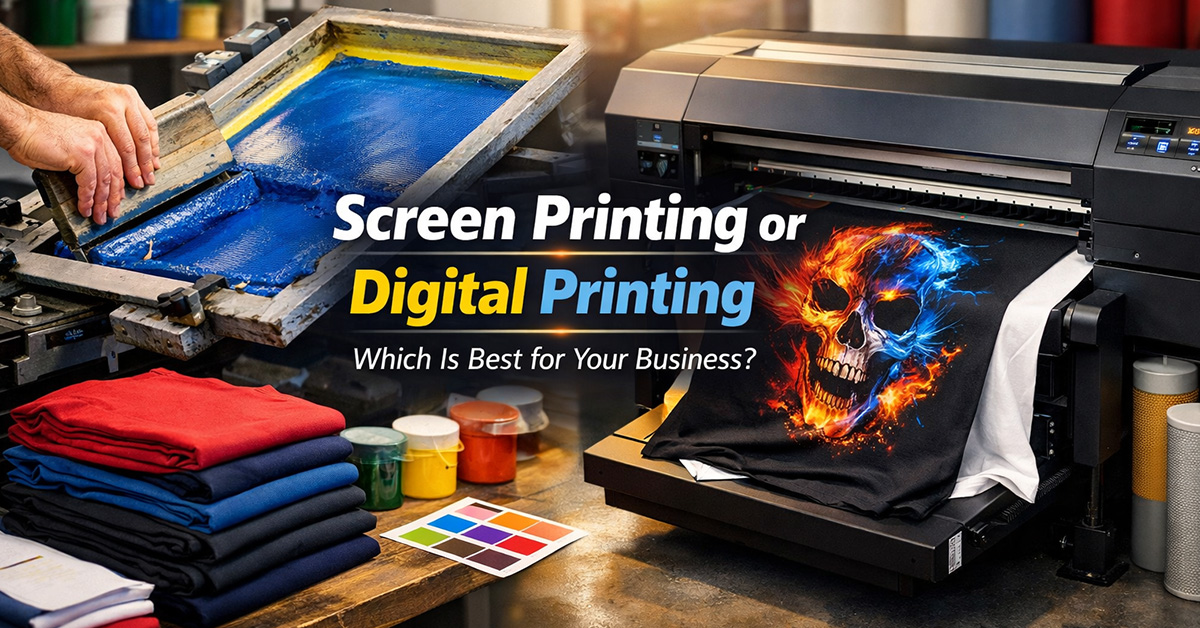
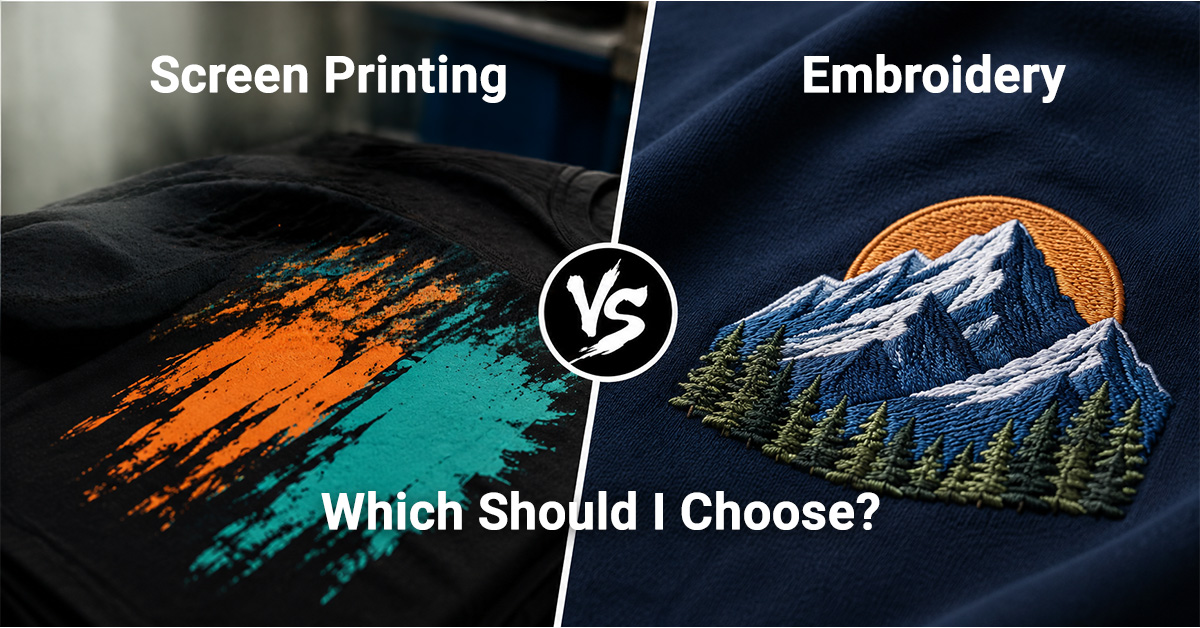
- Screen printing is the go to when you need large quantities done without stretching your budget. It builds prints layer by layer using stencils and ink producing results that stay sharp and intact through heavy use. The more you order, the lower each unit costs, which makes it genuinely practical for runs of 50 pieces and above.
- Digital printing or DTG, handles what screen printing cannot. Complex artwork, photographs, gradients, anything with fine detail or a wide colour range prints cleanly and accurately straight onto the fabric. It works across order sizes, as long as the design demands it.
- Embroidery sits in a different league. The design is stitched directly into the fabric, giving the finished piece a texture and weight that printing simply cannot replicate. It is popular for corporate uniforms, polo shirts and cap customisation where durability and a formal appearance matter. It is popular for corporate uniforms, polo shirts and cap customisation where durability and a formal appearance matter.
Each method has a different price point, turnaround, and design compatibility. Discussing your specific artwork with the printer before committing to a method is always worth the time.
Fabric Selection for Bulk Orders
The t-shirt itself matters as much as the printing on it. For bulk orders, the fabric choice affects comfort, print quality, and how well the shirt holds its shape after repeated washing.
100% cotton is breathable, comfortable and works well with most printing techniques. It is the preferred choice for events in warm climates. Polyester and poly-cotton blends were built for movement. They handle sweat, outdoor conditions, and repeated physical use without breaking down, which makes them the more practical choice over pure cotton when the activity level is high. Blended fabrics also tend to resist shrinking, which is worth considering when ordering across a wide size range.
GSM, or grams per square metre, is the measurement that tells you how heavy or light a fabric is. A 180-220 GSM range is standard for everyday t-shirts. Heavier GSM fabrics feel more substantial and tend to last longer. Always ask your supplier about the GSM before approving the blank garment.
Design Specifications That Matter
Submitting the wrong file format or a low-resolution image is one of the most common reasons bulk orders get delayed. Before sending your artwork, keep these points in mind:
- The artwork you send sets the ceiling for what the final print can look like.
- Screen printing needs vector files, AI or PDF, because they stay sharp at any size.
- DTG requires a PNG or JPEG at 300 DPI minimum to hold fine detail.
For colours, share Pantone or CMYK codes directly. What looks accurate on your screen often prints differently on fabric. In a bulk order, that gap in colour accuracy does not stay hidden. It shows up on every single piece.
Sizing and Quantity Planning
Ordering the right size distribution for a bulk order is something many first-time buyers underestimate. A typical spread for a corporate or event order might look like 10% small, 25% medium, 35% large, 20% XL, and 10% XXL, but this depends heavily on your audience. For college events, the spread may skew smaller. For industrial or corporate teams, it often skews larger.
Always confirm whether the sizing chart provided by the manufacturer matches standard Indian sizing. Sizing can vary between brands and fabric types, so requesting a size sample before full production is a reasonable step for orders above 200 pieces.
Turnaround Time and What Affects It
A standard bulk order with a ready design file typically moves through production in 7 to 10 working days with most professional printers in Chennai. Tighter deadlines are workable. Some printers can turn an order around in 24 to 48 hours depending on the quantity and the method being used, though that speed usually comes with an express fee attached.
Delays most commonly happen because of late design approvals, last-minute size changes, or artwork that needs rework. Submitting everything, including the finalised design, size breakdown and garment preference, at the beginning of the process keeps production moving without interruption.
Pricing Logic for Bulk Orders
Bulk pricing has a straightforward logic to it. The larger the order, the less each unit costs. Screen printing reflects this most clearly because the setup involved, building the screens and frames, is a one-time cost that gets absorbed across the entire batch. Order more and that fixed cost becomes almost negligible per piece. Embroidery is different. Each garment takes the same amount of machine time, so the per-unit cost stays fairly level regardless of quantity.
Before you lock in your order size, ask your printer for a tiered pricing breakdown. Seeing the actual cost difference between 100 and 200 pieces often changes the conversation internally, particularly for company merchandise or shirts that get reordered every year.
At Chennai T-Shirts, we have worked with businesses, colleges, startups, NGOs, and event teams right across Chennai. Every bulk order that comes to us carries its own brief, its own deadline, and its own standard. We do not simply process orders and move on. From the first conversation about your design to the moment the finished batch reaches you, we stay in it. Screen printing, DTG, embroidery, custom labels, brand tags, packaging, we handle all of it under one roof so nothing falls through the gap. At Chennai T-Shirts, every order we take on as a T-shirt manufacturer in Chennai is held to the same standard, whether it is 50 pieces or 500. Quality does not scale down with quantity. If you have a bulk requirement coming up, get in touch with us and we will make sure it is done the way it should be.